
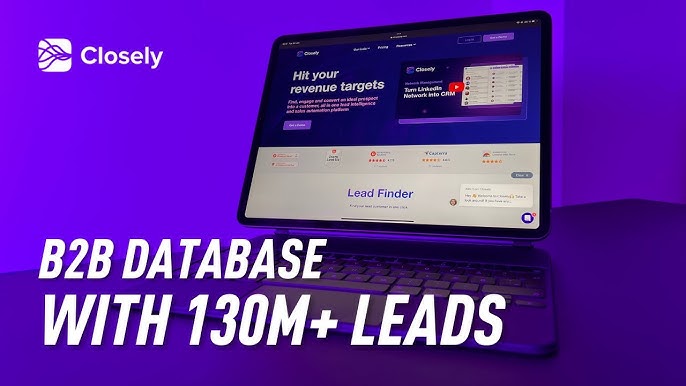
Are you struggling to keep your lead engagement efforts efficient and effective? Look no further.
Closely is your all-in-one solution for LinkedIn and email outreach. This powerful platform combines automated LinkedIn campaigns, email outreach, and a vast B2B database, simplifying the process of connecting with prospects. In today’s competitive market, reaching the right prospects quickly is crucial. Closely streamlines your lead engagement by automating connection requests, follow-ups, and engagement actions on LinkedIn. It also integrates email campaigns, allowing you to connect your Gmail or Outlook accounts, use custom variables, and track performance. With advanced filters, you can generate targeted prospect lists from a database of over 100 million contacts. Plus, Closely’s email validation feature ensures your campaigns perform better by improving your sender reputation. Ready to elevate your outreach strategy? Explore Closely now by visiting their website here.
Credit: www.developing.dev
Introduction To Financial Review
Conducting a thorough financial review is crucial for understanding your financial health. It helps in identifying strengths and areas for improvement. This process ensures that you are on the right track to achieving your financial goals.
Understanding The Importance Of Financial Review
A financial review provides a comprehensive look at your finances. It includes an analysis of your income, expenses, savings, investments, and debts. This review helps in:
- Identifying spending patterns
- Highlighting unnecessary expenses
- Evaluating investment performance
- Ensuring effective debt management
By understanding these aspects, you can make informed decisions about your finances. This can lead to better financial stability and growth.
Setting Clear Financial Goals
Setting clear financial goals is essential. It provides direction and purpose to your financial review. Follow these steps to set effective financial goals:
- Define your financial objectives (e.g., buying a house, saving for retirement)
- Set specific, measurable, achievable, relevant, and time-bound (SMART) goals
- Create a plan to achieve these goals
- Regularly monitor and adjust your goals as needed
Having clear goals helps in maintaining focus and motivation. It ensures that your financial review is aligned with your long-term objectives.
| Steps | Description |
|---|---|
| 1. Define Objectives | Identify what you want to achieve financially. |
| 2. Set SMART Goals | Ensure your goals are specific, measurable, achievable, relevant, and time-bound. |
| 3. Create a Plan | Develop a step-by-step plan to reach your goals. |
| 4. Monitor and Adjust | Regularly review your progress and make necessary adjustments. |
By following these steps, you can ensure that your financial review is productive and goal-oriented.
Analyzing Your Income And Expenses
Understanding your income and expenses is crucial for financial stability. Analyzing these factors helps you make informed decisions and stay on track. Let’s explore how to track your income sources, categorize your expenses, and identify spending patterns.
Tracking Your Income Sources
Begin by listing all your income sources. This may include:
- Salary or wages
- Freelance work
- Investment returns
- Side gigs
Use a spreadsheet or an app to record each source and the amount received. This helps you understand how much money is coming in and from where.
Categorizing Your Expenses
Next, categorize your expenses to see where your money goes. Common categories include:
- Housing (rent or mortgage)
- Utilities (electricity, water, internet)
- Groceries
- Transportation (car payments, fuel, public transit)
- Entertainment (subscriptions, dining out)
Be detailed in your categorization. Track both fixed and variable expenses to get a clear picture of your spending habits.
Identifying Spending Patterns
After categorizing, review your expenses to identify patterns. Ask yourself:
- Are there areas where you spend too much?
- Do certain expenses fluctuate each month?
Use this analysis to pinpoint areas for improvement. Consider creating a budget to manage your finances better.
Tracking and analyzing your income and expenses is a key step towards financial well-being. Regular reviews help you stay in control and make necessary adjustments.
Creating A Realistic Budget
Understanding your finances begins with creating a realistic budget. Budgeting helps you manage your income and expenses, ensuring you can meet your financial goals. Here’s how to create a budget that works for you.
Choosing The Right Budgeting Method
Choosing the right budgeting method is crucial. Different methods suit different needs. Here are some popular options:
- 50/30/20 Rule: Allocate 50% to needs, 30% to wants, and 20% to savings.
- Zero-Based Budget: Every dollar is assigned a purpose, ensuring no money is unaccounted for.
- Envelope System: Use cash envelopes for different spending categories to control expenses.
Allocating Funds For Necessary Expenses
Allocating funds for necessary expenses ensures you cover your basic needs. Start by listing your fixed and variable expenses. Fixed expenses are regular monthly costs like rent, utilities, and loan payments. Variable expenses fluctuate monthly, such as groceries and transportation.
Create a table to organize your expenses:
| Expense Type | Amount |
|---|---|
| Rent | $800 |
| Utilities | $150 |
| Groceries | $300 |
| Transportation | $100 |
Setting Aside Money For Savings
Setting aside money for savings is essential for future security. Aim to save at least 20% of your income. Here are some tips:
- Open a dedicated savings account to avoid spending your savings.
- Automate transfers to your savings account on payday.
- Set savings goals for short-term and long-term needs.
Remember, every small amount saved contributes to your financial stability.
Cutting Down Unnecessary Expenses
In today’s fast-paced business world, managing expenses is crucial. Cutting down unnecessary expenses can free up funds for more important investments. This is especially true for platforms like Closely, which helps businesses streamline their cold outreach. Below are key strategies to help you manage your costs effectively.
Evaluating Recurring Expenses
Start by evaluating your recurring expenses. Identify services and subscriptions that you pay for monthly or annually. With Closely, you have various pricing plans. The Plan 1 costs $69 for lifetime access with 2,000 monthly credits. Plan 2 offers more features at $138, and Plan 3 provides the most at $207.
| Plan | Cost | Features |
|---|---|---|
| Plan 1 | $69 | Lifetime access, 2,000 monthly credits |
| Plan 2 | $138 | Lifetime access, 4,000 monthly credits, 1 LinkedIn seat, 1 email seat |
| Plan 3 | $207 | Lifetime access, 6,000 monthly credits, 1 LinkedIn seat, 1 email seat |
Review these plans. Determine if you are getting the best value for your money. If not, consider downgrading to a lower plan.
Finding Alternatives To Reduce Costs
Explore alternatives to reduce costs. For example, if you use multiple tools for LinkedIn and email outreach, switch to an all-in-one platform like Closely. This platform combines LinkedIn Campaigns and Email Campaigns. It also includes Email Validation and a Lead Finder to generate targeted lists.
- LinkedIn Campaigns: Automated connection requests and follow-up messages.
- Email Campaigns: Customizable and trackable email outreach.
- Email Validation: Improves sender reputation.
- Lead Finder: Access to over 100 million contacts.
By consolidating these tools into one platform, you save money and increase efficiency.
Avoiding Impulse Purchases
Impulse purchases can add up quickly. Avoid these by planning your purchases. Use Closely’s Campaign Analytics to track your outreach performance. Focus on data-driven decisions rather than impulse buys.
- Set a budget for your outreach tools.
- Stick to your budget.
- Review analytics regularly.
By following these steps, you can cut down unnecessary expenses and make more informed decisions.
Maximizing Your Savings
Maximizing your savings is crucial for financial stability and future investments. By implementing a few strategic approaches, you can significantly enhance your savings. Let’s explore some effective methods to achieve this.
Opening A High-yield Savings Account
One of the simplest ways to maximize savings is by opening a high-yield savings account. These accounts offer higher interest rates compared to regular savings accounts. This means your money grows faster without any extra effort.
- Look for accounts with no monthly fees.
- Ensure the account has competitive interest rates.
- Check for any minimum balance requirements.
By choosing the right high-yield savings account, you can earn more interest and boost your savings over time.
Automating Your Savings
Automating your savings can significantly increase your savings rate. Set up automatic transfers from your checking account to your savings account. This ensures that a portion of your income is saved consistently.
- Decide on a fixed amount to save each month.
- Set up automatic transfers on your payday.
- Monitor your savings progress regularly.
Automation removes the temptation to spend money that should be saved, helping you stay disciplined and grow your savings effortlessly.
Exploring Investment Opportunities
Beyond traditional savings accounts, exploring investment opportunities can further maximize your savings. Investments can offer higher returns compared to savings accounts.
| Investment Type | Potential Return | Risk Level |
|---|---|---|
| Stocks | High | High |
| Bonds | Moderate | Low |
| Mutual Funds | Moderate to High | Moderate |
Each investment type has its own risk and return profile. It’s essential to research and choose investments that align with your financial goals and risk tolerance.

Credit: www.youtube.com
Reviewing And Adjusting Your Financial Plan
Regularly reviewing and adjusting your financial plan is essential. It ensures your strategies stay aligned with your goals. By consistently monitoring your finances, you can make informed decisions and adapt to changes.
Regular Financial Check-ups
Performing regular financial check-ups helps you stay on track. Schedule these check-ups monthly or quarterly to review your budget, expenses, and savings. This habit allows you to identify any discrepancies early and take corrective action.
Use a spreadsheet or financial software to track your income and expenses. Review your bank statements and credit card bills. Look for areas where you can cut costs or save more. Keeping a close eye on your finances helps prevent overspending and increases your savings.
Adjusting Your Budget As Needed
Sometimes, you may need to adjust your budget. Unexpected expenses or changes in income can affect your financial plan. Being flexible and ready to tweak your budget ensures you stay on track.
Start by identifying areas where you can reduce spending. For example, you could cut down on dining out or limit non-essential purchases. Reallocate these savings to cover new expenses or boost your emergency fund. Regular adjustments help you maintain financial stability.
Staying Committed To Your Financial Goals
Staying committed to your financial goals requires discipline and perseverance. Set clear, achievable goals and remind yourself of them regularly. Celebrate small milestones to stay motivated.
Create a vision board or use a goal-tracking app to visualize your progress. Surround yourself with supportive friends or family members who encourage you. Remember, consistency is key. Stick to your plan, and you’ll achieve your financial goals.
Conclusion And Final Thoughts
Closely offers a powerful solution for cold outreach by combining LinkedIn and email automation with a vast B2B database. This all-in-one platform makes it easier to connect with prospects and manage campaigns efficiently. Let’s summarize the key steps and encourage you to take the next action.
Recap Of Key Steps
Closely simplifies lead engagement with several essential features:
- LinkedIn Campaigns: Automate connection requests and follow-up messages.
- Email Campaigns: Integrate with Gmail or Outlook for personalized outreach.
- Email Validation: Verify email lists to enhance performance.
- Lead Finder: Use advanced filters to generate targeted prospect lists.
- Campaign Analytics: Analyze over 20 key metrics with customizable reports.
- Multi-Channel Campaigns: Manage LinkedIn and email outreach from one platform.
Encouragement To Take Action
Now is the time to enhance your outreach efforts with Closely. Start by choosing a plan that fits your needs. Here are the pricing details:
| Plan | Price | Features |
|---|---|---|
| Plan 1 | $69 | Lifetime access, 2,000 monthly credits |
| Plan 2 | $138 | Lifetime access, 4,000 monthly credits, 1 LinkedIn seat, 1 email seat |
| Plan 3 | $207 | Lifetime access, 6,000 monthly credits, 1 LinkedIn seat, 1 email seat |
Each plan comes with a 60-day money-back guarantee, so you can try Closely risk-free.
Resources For Continued Learning
To help you get the most out of Closely, here are some valuable resources:
- Closely Product Page
- Access to guides and webinars provided by Closely.
- Live chat support for any questions or assistance.
These resources will ensure you have all the support you need to optimize your outreach campaigns and achieve your goals.

Credit: americanahighways.org
Frequently Asked Questions
What Is The Importance Of Closely Reviewing Documents?
Closely reviewing documents ensures accuracy and prevents errors. It helps identify inconsistencies and potential issues. This practice saves time and resources by avoiding mistakes.
How Does Closely Reviewing Improve Work Quality?
Closely reviewing improves work quality by catching errors early. It helps maintain high standards and consistency. This attention to detail enhances overall performance.
Why Should You Review Contracts Closely?
Reviewing contracts closely helps understand terms and conditions. It prevents misunderstandings and protects your interests. This thorough review ensures compliance and legal safety.
How Often Should You Review Your Work?
Regularly reviewing your work ensures continuous improvement. It helps catch mistakes early. Reviewing at each stage is beneficial.
Conclusion
Closely helps streamline your LinkedIn and email outreach efforts. Its user-friendly platform integrates B2B contacts, email verification, and advanced filters. This ensures you connect with the right prospects efficiently. Automation tools save time, while detailed analytics help track progress. Explore how Closely can enhance your lead engagement strategies. Ready to simplify your outreach? Learn more about Closely here.
